Breaking: Tornado Outbreak Threatens Millions – Urgent Safety Measures and Updates 2025
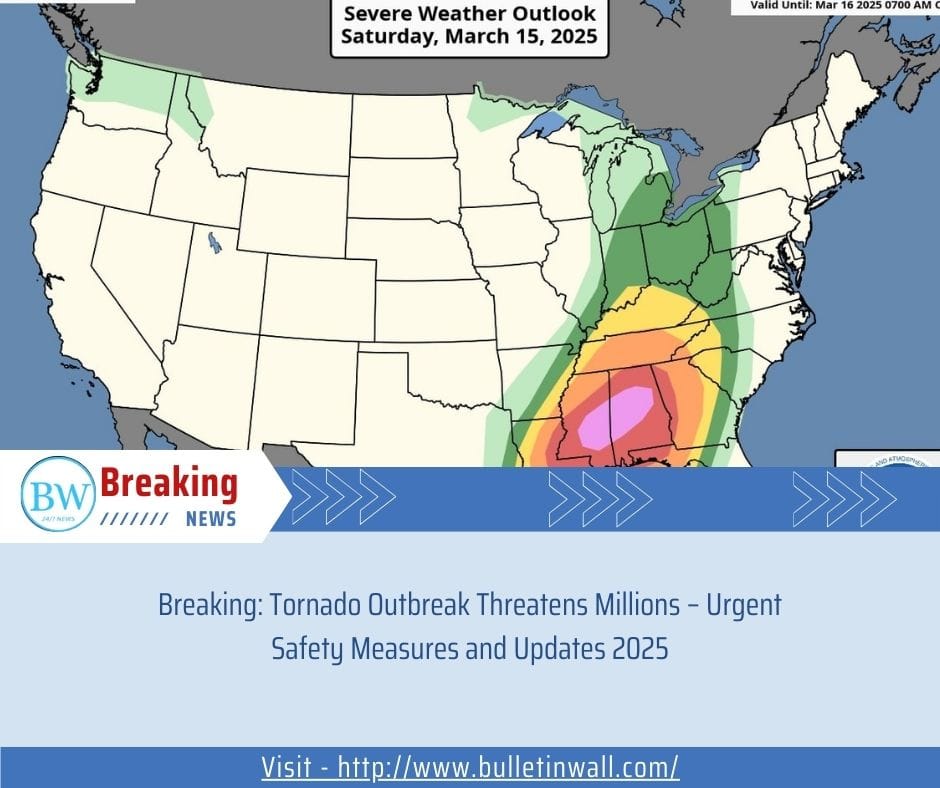
Severe Tornado are sweeping across parts of the United States today, triggering multiple warnings and putting millions of Americans on high alert. The National Weather Service (NWS) and the Storm Prediction Center (SPC) have classified this as a high-risk weather event, warning of potentially devastating tornadoes in states like Mississippi, Alabama, Tennessee, and Louisiana.
What is a Tornado Warning and Why Does It Matter?
When a warning is issued, it means that a tornado has been spotted or detected by radar, and immediate action is necessary. This is different from a tornado watch, which simply means conditions are favorable for tornado formation. Warnings indicate an active threat, and residents in affected areas should take cover without delay.
Why Is This Storm System So Dangerous?
Meteorologists are closely monitoring today’s storm system, which has the potential to produce multiple powerful tornadoes. Here’s why experts are particularly concerned:
- Multiple tornadoes could form in the same regions, increasing the risk of widespread destruction.
- Strong, long-lasting tornadoes are expected, potentially traveling for miles and impacting multiple towns.
- Severe thunderstorms will bring heavy rain, damaging winds, and the possibility of flash flooding.
- Baseball-sized hail has already been reported in some areas, causing extensive damage to vehicles and buildings.
High-Risk Areas – Are You in the Path?
The most at-risk locations for tornado activity today include:
- Jackson, Mississippi
- Birmingham, Alabama
- Nashville, Tennessee
- Hattiesburg, Mississippi
- Tuscaloosa, Alabama
Residents in these cities and surrounding areas should stay alert, keep emergency supplies ready, and monitor local weather updates for the latest information.
Life-Saving Safety Tips During a Tornado Warning
If you find yourself in the path of a tornado, knowing what to do could save your life. Follow these critical safety steps:
Immediate Tornado Safety Measures
- Seek Shelter Immediately – Move to a basement, storm shelter, or an interior room without windows on the lowest floor of your home.
- Protect Your Head and Body – Use pillows, blankets, or even helmets to shield yourself from flying debris.
- Stay Away from Windows and Doors – Glass can shatter, causing life-threatening injuries.
- Have Multiple Ways to Receive Alerts – Use a NOAA weather radio, emergency apps, or local TV and radio stations to get real-time updates.
- Keep an Emergency Kit Handy – Include bottled water, non-perishable food, flashlights, batteries, important documents, and first aid supplies.
- If Driving, Find a Sturdy Shelter – Never attempt to outrun a tornado in a vehicle. If no shelter is available, find a low-lying ditch and cover your head.
Remembering the Impact of Past Tornado Outbreaks
History has shown that tornado outbreaks can have catastrophic consequences. Some of the most destructive tornado events in recent U.S. history include:
- March 31, 2023 – A powerful outbreak devastated communities across Illinois, Arkansas, and Tennessee.
- May 6, 2024 – Oklahoma and Kansas were hit by deadly tornadoes, leaving thousands without power.
- April 27, 2011 (Super Outbreak) – One of the most infamous tornado outbreaks in U.S. history, producing over 360 tornadoes and causing widespread destruction.
Given the severity of today’s weather conditions, experts are urging residents to take these warnings seriously and prepare for possible impacts.
What’s Next? The Forecast for the Coming Hours
Storm activity is expected to peak between 3 PM and midnight, but tornadoes could develop earlier or later. The National Weather Service warns of continued risks, including:
- Flash Flooding – Heavy rain may overwhelm drainage systems, leading to hazardous road conditions.
- Widespread Power Outages – High winds and downed trees could knock out electricity in many areas.
- Hail and Debris Damage – Large hailstones and flying debris pose a major risk to vehicles, homes, and businesses.
- Travel Disruptions – Tornado damage and flooding could make roads impassable.
Final Thoughts: Stay Prepared, Stay Safe
Tornado warnings should never be ignored. If you are in an affected area, take precautions now. Have a safety plan, remain alert, and follow instructions from local authorities.
How to Stay Updated
- Check local weather forecasts on trusted sources like the National Weather Service, The Weather Channel, and AccuWeather.
- Enable emergency alerts on your smartphone for real-time updates.
- Follow social media updates from local meteorologists and emergency management agencies.
Disasters can strike with little warning, but preparation can make all the difference. Stay safe, stay informed, and check back for the latest updates on this developing situation.