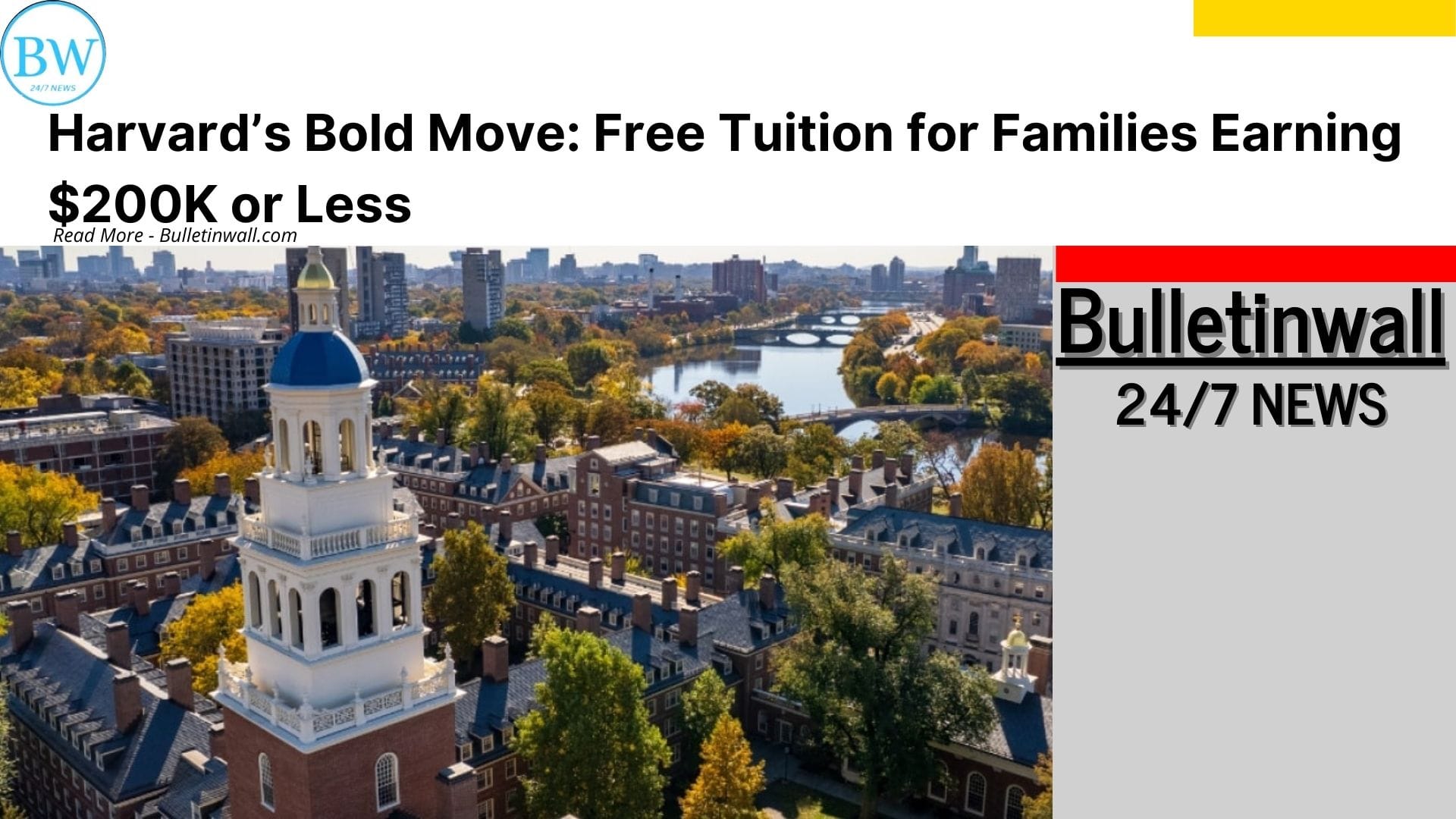
Harvard’s Bold Move: Free Tuition for Families Earning $200K or Less
Harvard University has unveiled a groundbreaking free tuition initiative, making higher education more accessible for middle-class and low-income families. Under this policy, students from families earning $200,000 or less per year will no longer have to pay tuition. This transformative decision is expected to benefit thousands of students across the U.S., reducing financial stress and making an Ivy League education a reality for more people.
Who Qualifies for Harvard’s Free Tuition?
For years, They have provided financial aid to students from low-income backgrounds, but this latest expansion broadens access significantly. The updated policy covers:
- Full tuition coverage for students from families earning $200,000 or less per year.
- Comprehensive financial aid for students from families earning $100,000 or less per year, covering tuition, housing, meals, and health services.
- Additional financial aid options for families earning above $200,000, depending on specific financial needs.
Currently, University tuition costs $56,550 per year, and when factoring in room, board, and health services, the total climbs to $83,000 annually. By offering free tuition, Harvard is significantly reducing the financial burden on students and their families.
Why Offering Free Tuition?
Higher education costs have been rising for decades, making it difficult for many students to afford college without accumulating massive debt. Harvard’s decision reflects its commitment to removing financial barriers and attracting talented students from diverse economic backgrounds.
Harvard President Alan M. Garber emphasized this goal, stating: “Putting Harvard within financial reach for more individuals widens the array of backgrounds, experiences, and perspectives that all of our students encounter, fostering their intellectual and personal growth.”
This policy change aligns with Harvard’s broader mission of promoting diversity, equity, and inclusion, ensuring that financial constraints do not prevent deserving students from accessing a world-class education.
How Will This Impact Other Universities?
Harvard’s move could inspire other universities to enhance their financial aid programs. Elite institutions like Princeton, Yale, and Stanford have already introduced improved financial aid plans, but Harvard’s tuition-free model sets a new standard.
Senator Bernie Sanders, a long-time advocate for tuition-free college, praised Harvard’s initiative: “Ten years ago, when I introduced a bill to make public colleges & universities tuition-free, it was called ‘radical.’ Not today.” With student debt at record highs, there is growing pressure on institutions to make education more affordable.
This decision could also influence public colleges and state universities to expand their financial aid programs, creating a ripple effect across the U.S. education system.
How Students Can Apply for This Financial Aid
Students who meet the eligibility criteria can apply for financial aid through a simple application process. Harvard provides resources, including workshops and counseling, to help families understand their options.
To apply for Harvard’s financial aid, students must:
- Submit the Free Application for Federal Student Aid (FAFSA).
- Complete the CSS Profile, which assesses financial need.
- Provide income verification documents, such as tax returns and financial statements.
Since launching the Harvard Financial Aid Initiative in 2004, the university has awarded over $3.6 billion in financial aid to undergraduates. This latest expansion is a continuation of its mission to make education accessible to all talented students, regardless of income level.
The Future of College Affordability
Harvard’s tuition-free initiative is a game-changer for higher education affordability. By covering tuition for families earning up to $200,000, the university is easing financial stress for middle-class and low-income students. This move also highlights the increasing need for universities across the U.S. to rethink their financial aid models and address the rising costs of education.
As more universities explore ways to expand financial aid, Harvard’s decision could mark the beginning of a larger shift toward more affordable higher education nationwide.
For now, this initiative provides hope for students who dream of attending Harvard but previously saw the cost as an insurmountable barrier. With tuition-free education now within reach, more students will have the opportunity to pursue their academic goals without the burden of overwhelming student debt.